 Portfolio of Keith Elder
Speaking - Delivering a Powerful Presentation
by Keith Elder
You've been selected and created an impactful presentation and now it's time to focus on delivering this story. There are many components that go into delivering a powerful presentation. Put yourself in the audience's shoes and think about what would you'd want to hear if you were them this will give you more confidence that you're delivering a message people want to hear. Here are tips to think about as you prepare to deliver your presentation, but NOTHING can replace the power of practice.
Stage Presence
The first thing we'll focus on is your presence on stage. This is the ability to command the attention of the audience and pull them into the story. You already have the story and the passion to tell it, so you have all the ingredients. This is really just putting together the finishing touches.
Body Language
- Use movement to make an impact. Movement can be tricky. As you get nervous, you may find yourself pacing. Movement should be intentional and used to help emphasize points.
- Think about your body language and what it's saying. For example, if your arms are crossed and you're rubbing your forehead before the talk even begins, what message is this sending the audience?
- Smile - there's nothing more powerful than a smile. Smile before you head on stage and as the audience filters in. Smiling will naturally bring a feeling of confidence and relaxation over your entire body.
Voice
- Inflection in your voice can be used for impact. Again, this needs to be intentional and reserved to emphasize key words or points. Speaking in one tone is hard to follow and your audience may not be able to easily distinguish what's important.
- Speak with confidence.
- Slow down. Speak slower than you normally would. When you get nervous, your heartbeat speeds up and you start talking faster. Remember, the audience is patient and wants you to succeed, but rushing through the material will turn them off. If you need to take a deep breath and reset, they'll wait for you.
- Tone and projection are also important parts of your delivery. If your tone doesn't match the words, just like in a conversation it'll confuse the audience and they'll be trying to figure out what you are "really" saying instead of being focused on your story. You're the guide on this journey.
- Pauses are powerful. Don't be afraid of silence after something really important. These pauses allow the audience time to think about the point. When you watch great public speakers, like Steve Jobs, they use pauses very effectively and create greater impact through a few seconds of silence then they could with speaking.
- Focus more on the voice instead of the message. Look for ways to draw upon and relay insights from your own experiences instead of the message alone.
Owning the Room
- Never use a laser pointer. These can be distracting and very hard to see from the back of the room. Use your presentation tool to create emphasis through arrows, shading, enlarging sections, etc.
- Don't turn your back on the audience to point to your slide deck. If you've practiced facing forward and not looking at your slide deck, you should've already adjusted your slides to highlight the parts you want to draw attention to.
- Be fresh, enthusiastic and entertaining. Remember that the audience came to learn or hear something you have to say. They picked your session for a reason.
- Don't read to your audience. You're on stage because you know your stuff and have something to say.
- Scan the audience to get instant feedback. For example, if everyone is looking down and not making eye contact, think about what you can say or do to re-engage them.
- If you mess up, don't call attention to it. Take a pause and resume speaking like that was part of your plan. The audience doesn't know what you were going to say. So, unless you call attention to it, they may not even notice
- Find friends in the audience and make eye contact with them. This will help you be more confident and relaxed. But, don't call them out or talk to one or two people in particular, as it can alienate the rest of your audience.
- Talk to everyone.
- Don't use presenter view in powerpoint unless you don't have to leave Powerpoint during your presentation. If you have to do a demo, then just duplicate your screen. (You should already know your slides and have practiced your timings anyway.)
- As long as you have something up on the screen for the audience to look at, it takes the focus off of you to the screen. Try inserting a black screen when there's nothing on it. If there's nothing on the screen to look at, then that'll bring the focus back to you!
- Have fun. Feed off the energy of the crowd and remember, they want you to succeed.
Prepare for the Unexpected
Things are going to happen outside of your control. I've personally had so many things happen while I was public speaking it's hard to remember them all. Everything boils down to how you handle adversity and how you lighten the mood. Use it as an opportunity to joke around with the audience.
One time I was speaking to a room of about 100 people and luckily I had gotten to the room super early to get everything plugged in. About fifteen minutes before I went on, everything shut down. Long story short, I had to run and find A/V people to run new surge protectors to the room because the ones there went bad.
In other instances I've had projectors shut down right in the middle of my presentation. And it wouldn't come back on. I've lost Internet connections, had demos that I rehearsed 20 times all of a sudden blow up because a Windows update got applied during the middle of the night. I even had audio from another room being piped into my room while I was trying to present. It isn't a matter of if something is going to happen, it is just a matter of when.
Keep your wits, don't melt down and go straight into problem solving mode. If it's getting worked on by someone, take the time to take questions from the audience.
Technical Demos
Practice your demos over and over again. Reset and do it again. Create a habit and when it comes time to do your demo, your brain will instigate the habit and run with it. You'll be more engaged with the audience. This is kind of like backing your car out of your driveway. You're thinking about other things while you back out because this is a habit that's been created.
If you're doing a technical talk with demos here are some additional things to think about:
- Prepare for technical difficulties and make sure you have a back-up plan in case you can't do the demo or something goes wrong during it. Be ready to act fast and pivot to your back-up plan. Again, this is where all that practice will come in handy!
- Use GIT to share your code demos.
- If your demo requires a lot of typing, is there a way to have this saved so you can copy & paste? This will ensure you don't mistype words and have to spend time troubleshooting in front of the audience.
- If you're presenting a complex demo, use GIT to help reset your demo in case something breaks. One way to do this is have different steps in different branches ready to go.
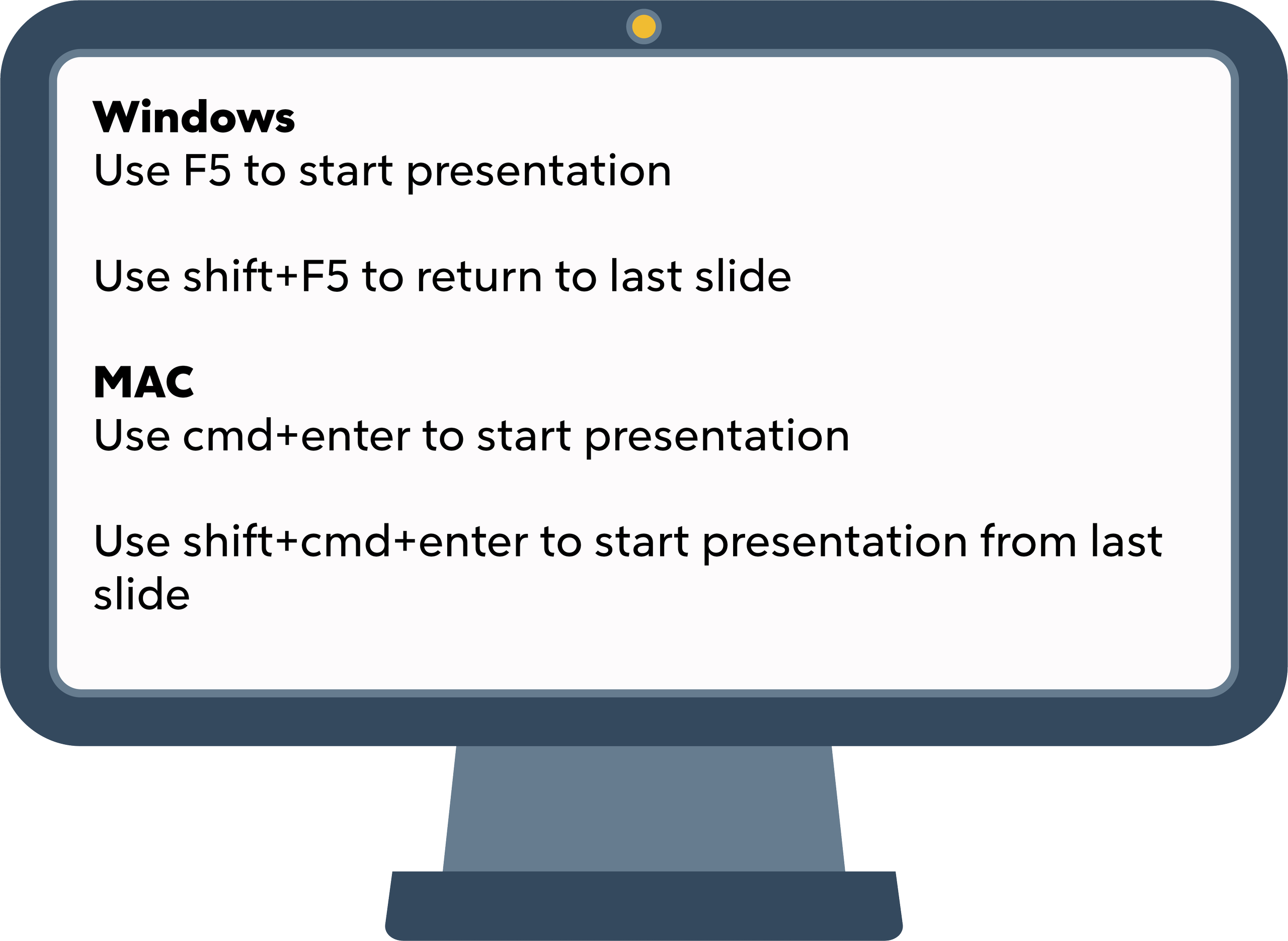
Know Your Presentation Short-Cut Keys