 Portfolio of Keith Elder
Speaking - Writing a Bio
by Keith Elder
When you're applying to speak at an event, you'll need to submit two items: A picture of yourself, referred to as a headshot, and a bio. When new speakers start writing their bio, they often find it difficult to get started. While they know the subject matter – themselves – very well, many find distilling their career down to a paragraph to be a challenging and daunting task. The longer and more prosperous your career, the more difficult. The art of a great bio hinges on including just the right amount of information. Less is more.
To get started, consider these five key points that every bio should have:
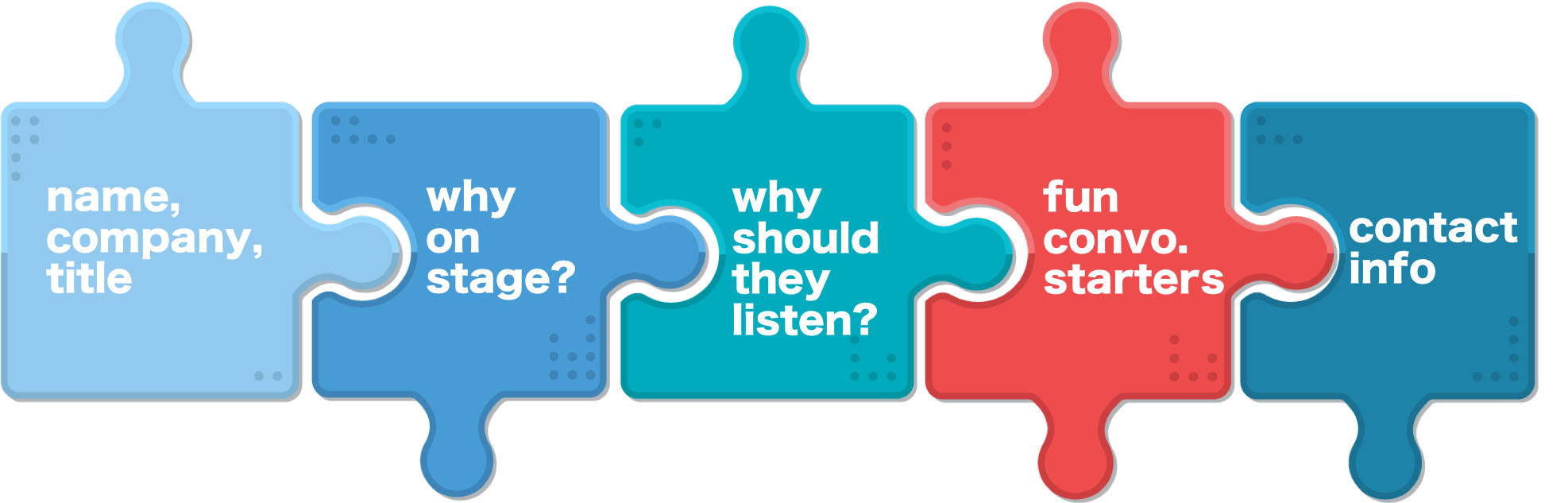
If you find that you have too much information you want to include, begin with a simple bulleted list. Then, take each point on your list and see where it lines up with the key points list above. If something doesn't fit, leave it out. You'll likely find this an easy way to start cutting out information. Here is an example using my bio.
| 1. Name, Company, Title | Example |
|---|---|
| Your bio should open directly with who you are, where you work and your role. Here, you should also include any significant information about your company. It should always be written in third person. | Keith Elder is the Senior Technology Evangelist at Quicken Loans, the nation’s largest mortgage lender, which is based in Detroit, Michigan. |
| 2. Why Are You on Stage? | Example |
| The first part of your story, and the first thing readers will want to know, is why you're speaking. The second, and maybe also third, sentence should include some of your experience. For example, if you're speaking at a conference on building houses, you might say you're a fifth-generation home builder who has been building houses for 20 years. If you're going to be talking about leadership, include your experience in leading others. | He's an experienced technologist, architect, systems administrator, software engineer, speaker, trainer and all-around geek. |
| 3. Why Should They Listen | Example |
| This section gives you a chance to convince readers and attendees why they should care about what you have to say. For example, if you've created or invented a piece of technology or won the Pulitzer Prize, that would be good for the reader to know. | He's spoken throughout the U.S. at major technical conferences on topics ranging from various new technologies to software architectures and soft skills. For more than 12 years, he led the Engineering Tools team as the Director of Software Engineering within Quicken Loans. |
| 4. Fun Conversation Starters | Example |
| Bios don't have to be boring. Feel free to add some levity to your bio, and don't be afraid to add some personal touches to close it out. These conversation starters are a great way to engage with conference attendees after your talk is done. "When not sitting in front of a computer," tells the reader that Keith loves technology and spends a good deal of his free time with it. The second half of the example incorporates something else he does in his spare time – saltwater fishing. This gives attendees something to relate to and is a great ice-breaker for them if they want to talk to Keith. He often gets approached by conference attendees telling him how much they love the name of his boat and asking what type of fish he catches. Maybe you like to cook, make refreshing drinks for friends, play video games, sing karaoke or cross-stitch. Whatever it is, add it in there. | When not sitting in front of a computer, he spends the majority of his time as captain of the vessel Sea Sharp, navigating the waters in the Gulf of Mexico in search of giant pelagic fish. |
| 5. Contact Information | Example |
| Include some information so that attendees can learn more about you and what you have to say. Blogs and social media are great things to include here. | You can read more about Keith's interests, hobbies, rants and raves on his blog at http://KeithElder.net/ and follow him on Twitter at http://Twitter.com/KeithElder. |
When we put all of these points together, the bio gives the reader a picture of who you are and why you are presenting. For speaker selection committees that may have never heard of you, this gives them a good picture of the value you can bring to their event. They'll be asking, 'Should we take a chance on scheduling this session?' A conference attendee will be asking themselves, 'Should I devote my time to attend this talk?' Your bio is the only information they have to decide, so it's worth all the time and energy you can put into it. Check out Keith's full bio example below.
Full Bio Example:
Keith Elder is the Senior Technology Evangelist at Quicken Loans, the nation’s largest online mortgage lender, which is based in Detroit, Michigan. He's an experienced technologist, architect, systems administrator, software engineer, speaker, trainer and all-around geek. He's spoken throughout the U.S. at major technical conferences on topics ranging from various new technologies to software architectures and soft skills. For more than 12 years, he led the Engineering Tools team as the Director of Software Engineering within Quicken Loans. When not sitting in front of a computer, he spends the majority of his time as captain of the vessel Sea Sharp, navigating the waters in the Gulf of Mexico in search of giant pelagic fish. You can read more about Keith’s interests, hobbies, rants and raves on his blog at http://KeithElder.net/ and follow him on Twitter at http://Twitter.com/KeithElder.
PRO TIPS:

Bios should be written in third person.
Your bio should be no more than 150 words and not take more than 30 seconds to read!