 Portfolio of Keith Elder
CARI
by Keith Elder

What is CARI?
CARI stands for Contacts and Resource Information and is an in-house Quicken Loans developed Customer Relationship Management. A lot of technologists refer to this type of system as a CRM application. CARI focuses on creating and maintaining our relationships with our clients.
CARI was created for three purposes:
The first purpose was to eliminate tracking client information on paper and within other desperate applications that didn’t communicate with our core systems such as CTI for example. Before CARI, mortgage bankers were using a myriad of ways to store client information from Excel spreadsheets, Access, ACT, Outlook and even on paper. Anyone that is in sales knows how important it is to be able to put your hands on your client information quickly and easily, especially when a client you haven’t spoken to in years calls in.
The second purpose of CARI was to fulfill a vision: Provide a single interface where all client information could be viewed in one screen even if the information was kept in separate silos or systems. By amalgamating the systems into one interface, the clients’ experience is heightened, and Mortgage Bankers are much more efficient. Client information is right at the bankers’ fingertips!
The third purpose of CARI was to centralize client information electronically into one repository. Putting all of your eggs in one basket it turns out does have lots of advantages. By centralizing client information into one system, Marketing can now easily search client information for ad hoc marketing campaigns and easily manage ownership, opt outs and more. Any client that gets a thank you card, birthday card, or an email that alerts them to lowering interest rates, first starts from within CARI.
CARI stores personal contact information, profile information, property information, and employment information of our clients. Bankers can also track client communications using the Fax Logs, Email Activity logs, Follow-Up History, and the Previously Contacted Contacts listing. Contact functionality also includes: adding new contacts, modifying contacts, bulk-importing of contacts, and submitting contacts to our internal Leads Allocation system or LOLA. Here is a sample contact screen to show how all of this information is pulled together into one unified view:
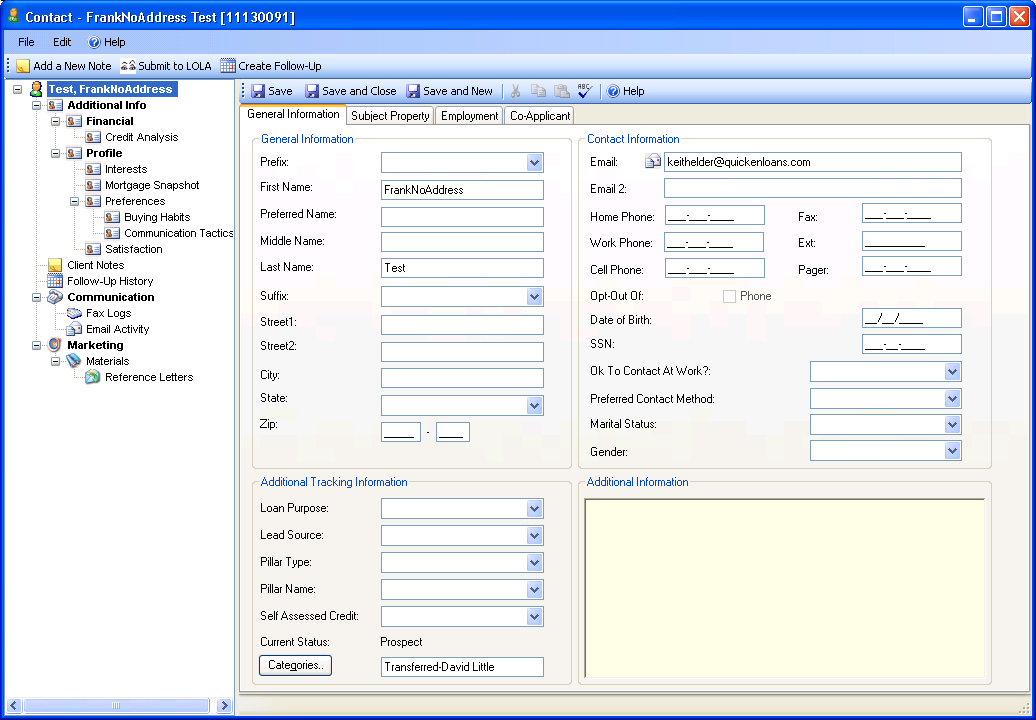
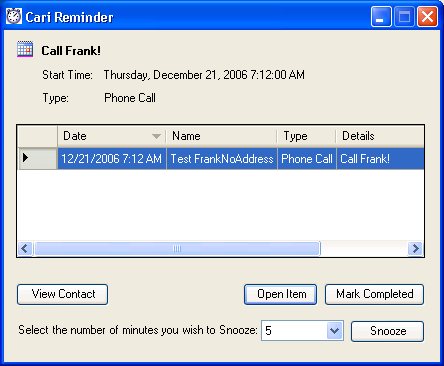
CARI provides bankers the ability to store permanent notes about each client called Client Notes, and to schedule follow-ups with prospective clients. The scheduled follow-ups show up on the Dashboard or main communication area of CARI. Because CARI is a full blown Windows application it can easily integrate with other applications such as Outlook. A case in point is when a follow-up is scheduled from within CARI; it is automatically scheduled in Outlook. Any banker that uses a Blackberry appreciates this feature since they can manage their calendar while out of the office. CARI also provides reminders for the upcoming follow-ups to the bankers.
CARI implements a roles-based security model, which means that certain groups of users get different functionality within the application. CARI uses Active Directory to authenticate these roles based on user groups, and identities. CARI also allows users to impersonate or login to another persons CARI application, but only if that person physically gives permission to do so. This is useful for banker assistants and interns so that they can schedule follow-ups on behalf of a banker.
For the Marketing Team, CARI provides the ability to search client data and then use the results of the search to fulfill various mail or email campaigns. For example, how many clients live in Michigan that has a 30 year fixed mortgage, an interest rate of 6.5% that has a birthday this month and that likes basketball? Being able to centrally track client profiles and campaign information centrally allows the Marketing Team to do what it does best, market. Eventually mortgage bankers will have similar functionality so stay tuned.
Client ownership is another big piece of the CARI puzzle. In other words, if a banker get promoted, he/she no longer processes loans and their clients must be transferred to other members of their team. Before CARI, this was all manually done and almost impossible to manage. Today, CARI gives users different types of transfer functionality -- where a client can be transferred from one banker to another. Marketing team members as well as CARI administrators can transfer large groups of clients, whereas bankers can only transfer individual clients that they own. CARI is the system of record for client ownership and feeds other systems such as Lakewood and LOLA ownership data.
Who Uses CARI?
All Web and Mortgage Bankers use CARI to manage their contacts, schedule follow-ups, search for their contacts, and to view their Closed Client Reports. Banker assistants and interns use CARI to schedule client follow-ups for bankers and update client information. Marketing team members use CARI to filter client data for mail and email campaigns, as well as client transfers from banker to banker.
How does CARI Add Value to Our Business?
CARI allows our bankers to efficiently lookup and manage client information in real-time. No longer is the day that a banker must look for pieces of information from multiple systems, both electronic and paper based. It eliminates duplication of information and is the central hub where all client information either starts or ends. In other words, if the client information isn’t entered directly into CARI, it will still eventually wind up within CARI. It is the Alpha and the Omega for client information at Quicken Loans.
How does CARI Help Automate Our Business Process?
Bankers no longer have to re-type closed client information back into LOLA to initiate a new loan. Simply by opening their closed client report and locating the client they can submit any client or prospect directly into LOLA for processing. Ownership of clients is now automated. If a banker is termed, that bankers clients are re-allocated to their team leader. CARI is also the central system of record for what is referred to as a Global Client ID or GCID. GCIDs are unique numbers that identify each client. Based on a client’s SSN a GCID is generated. In some cases it is re-used if it already exists. This process is a huge win for the company since it helps the business uniquely identify a client and locate their already existing information. Systems like Lakewood and LOLA request GCIDs from CARI for everyone Loan we process or anytime a SSN is changed.
CARI also assists in serving up leads back to the bankers for loans that never closed or even closed clients. The Business Intelligence team uses CARI data to automate these lead flows back into LOLA.
There are more examples but one of the largest business processes CARI will assist with is automating Marketing Campaigns. This is currently under development and once completed will finally allow us to generate and fulfill campaigns with the simple click of a button. Even bankers will be able to initiate campaigns on their behalf to their clients.
What Technology is CARI Based On?
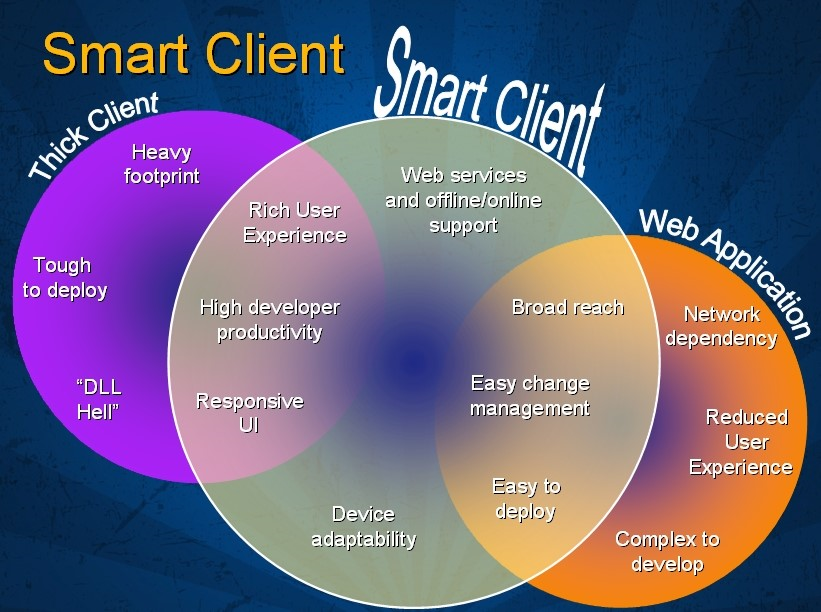
CARI was developed using Visual Studio 2005 utilizing C# in .NET 2.0. Initially CARI was apart of the Microsoft Ascend program which allowed the developers to build and launch CARI on beta software. VS2005 was released in November of 2005, but development on CARI began in March of 2005. Knowing the huge impact CARI was going to play on the business and the launch date, it was determined to roll the dice and build CARI on beta software. In the end it was a risk that paid huge dividends in productivity and prevented the application from having legacy problems down the road.
CARI is what is called a Smart Client application. It is a cutting edge type of application that borrows the best from Thick Clients and Web Applications.
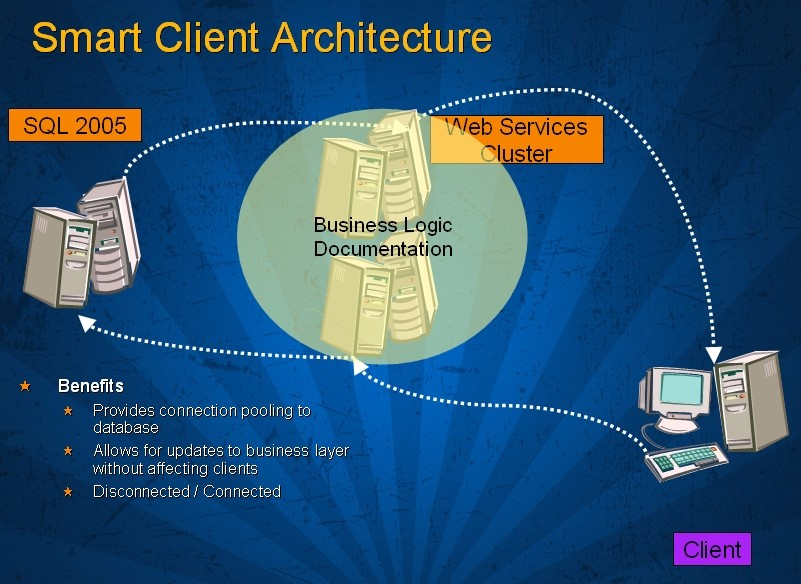
On the client side we have a click-once deployed windows forms application, and on the server side we have a collection of web services that implement WSE 3.0 for security. The web services are further broken down into layers which are self contained DLL’s for business, and data layers. The data store for CARI is SQL Server 2005.
CARI Architecture
CARI is based on a Services Oriented Architecture (SOA). CARI has two load balanced Windows Server 2003 IIS Web Servers that serve up all SOAP web services, documentation and provide the download for the front-end UI. The only way into the database is through the web service(s). This helps ensure data integrity and allows for one centralized place where all business logic can be stored. Another benefit is it allows the CARI Team to make needed changes in business logic without having to re-deploy the front-end UI.
Videos
TODO - add cari videos